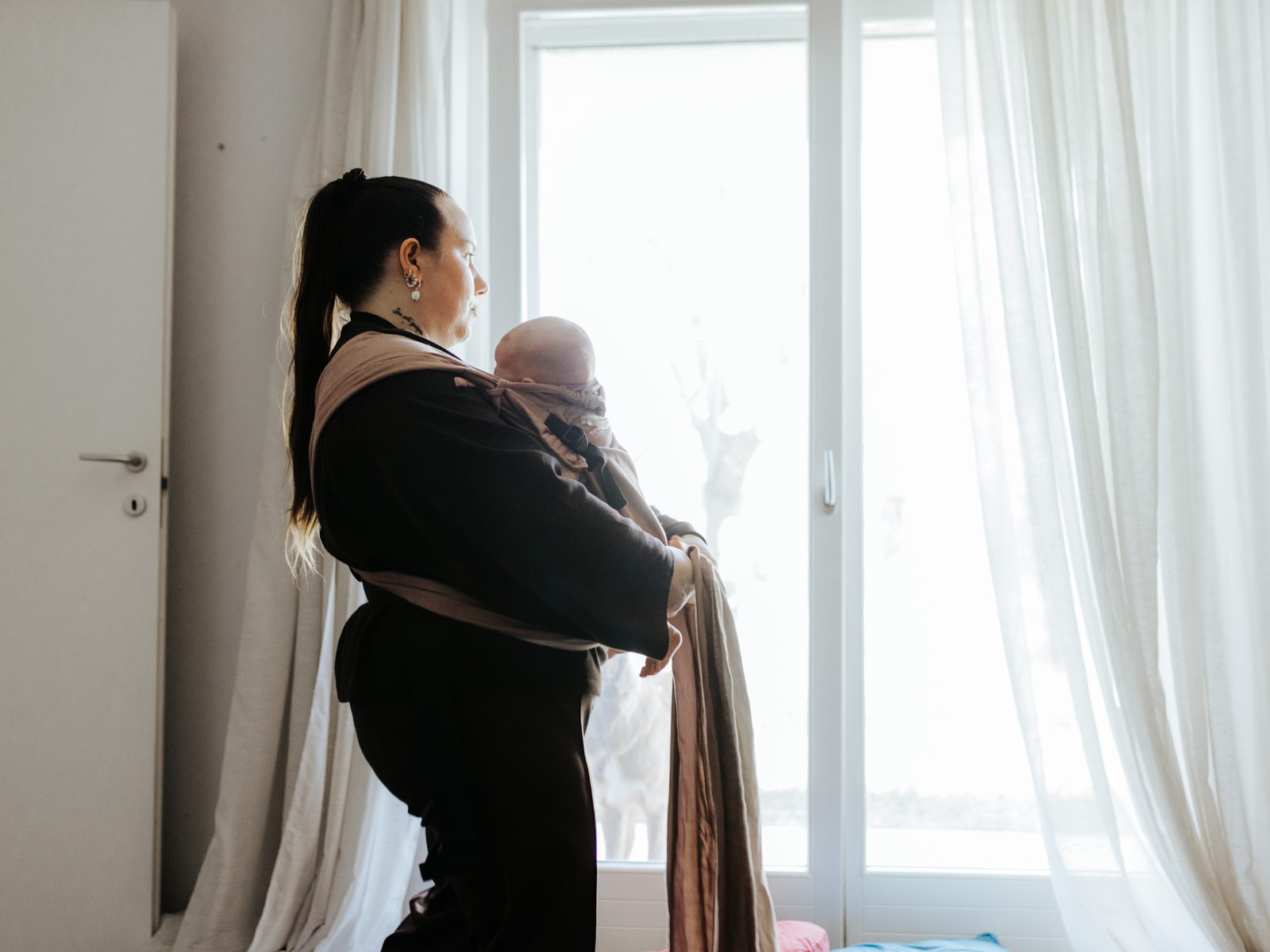
Everyone prepared you for childbirth. Nobody told you what happens next.
The nights of broken sleep, a body in constant transformation that you barely recognize, and an overwhelming love for your baby that lives side-by-side with a deep, unprecedented exhaustion.
Society often teaches us to pack the hospital bag, pick out the stroller, or attend childbirth education classes. But when you finally come home with that tiny bundle of life in your arms, you suddenly find yourself navigating an unfamiliar territory: The Fourth Trimester.
Coined by renowned pediatrician Dr. Harvey Karp, this term refers to the first three months of a newborn's life—a critical period where birth isn't just about the baby, but also about the mother. It is a true phase of "external gestation." On one hand, the newborn must adapt to the sensory stimulation of the outside world while learning to regulate hunger, sleep, and the deep need for human contact. On the other hand, the mother undergoes a profound neurobiological and hormonal reorganization, experiencing a sharp drop in estrogen and progesterone while prolactin and oxytocin levels adjust. Understanding this delicate physiological and anthropological transition—further detailed in the World Health Organization (WHO) postnatal care guidelines—helps lower unrealistic expectations and allows you to embrace the slower pace this adaptation truly requires.
What If Joy Doesn't Arrive the Way You Expected?
Sometimes, the postpartum period isn't what you imagined or what you saw in commercials. I often meet mothers who share that they didn't experience an immediate "love at first sight," or who feel weighed down by an unexpected sense of loneliness. At times, exhaustion takes over, and the shadows seem much larger than the light.
If you feel this way, I want to tell you something crucial: it is not your fault, and you do not have to go through this alone.
It is essential to understand the differences between the various emotional experiences that can arise during this time:
- The Baby Blues: Affects up to 80% of new mothers. It appears within the first few days after birth and is characterized by mood swings, unprovoked crying, mild anxiety, and fatigue. It is a temporary, physiological response linked to the sudden hormonal crash, which typically resolves naturally within a couple of weeks with adequate rest and emotional support.
- Postpartum Depression (PPD): Affects approximately 10–15% of women and is a deeper, more persistent condition. It can manifest during the first few months after birth with feelings of inadequacy, detachment from the baby, severe anxiety, or profound sadness.
As highlighted in the U.S. Department of Health and Human Services maternal mental health resources, the baby blues and postpartum depression are neither personal failures nor flaws. They are real conditions that deserve compassionate listening, specialized care, and support—never shame.
A Sacred Time of Transformation
At Mairuna, we view the postpartum period as a sacred time of transformation: for you as a woman, for your baby, and for the birth of your new family unit. It is a milestone that deserves to be accompanied with the exact same care, presence, and dedication given to childbirth itself.
Looking for personalized postpartum support?
Even if you cannot attend our in-person group classes, you don't have to navigate this transition on your own. We offer one-on-one virtual postpartum consultations and tailored support plans to help you heal, find your balance, and feel fully supported in the comfort of your home.
Explore our 1-on-1 Postpartum Support & Virtual Consultations Services Here